
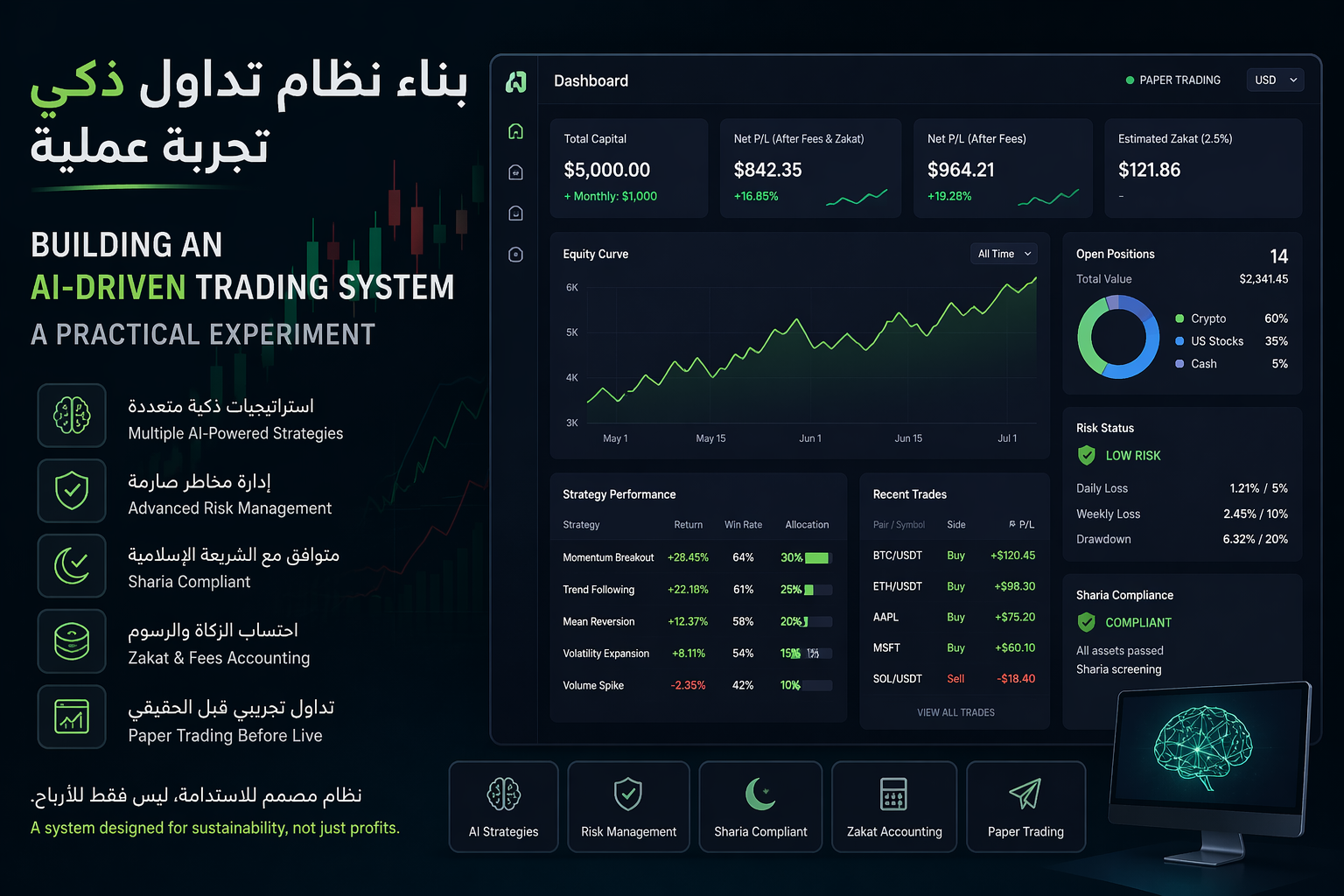
Over the past few weeks, I’ve been working on building a fully automated trading system as a personal experiment.
The goal was not just to “build a bot,” but to design a structured, intelligent system that can operate across multiple markets while managing risk, learning from its performance, and evolving over time.
What I built
The system is designed to trade:
Cryptocurrency markets
US equities
It operates on an hourly cycle and combines:
Data-driven strategies (momentum, trend, mean reversion, volatility)
Sentiment signals (used to adjust confidence, not blindly follow hype)
An adaptive learning layer that reallocates capital toward better-performing strategies
Key principles
Rather than chasing short-term gains, I focused on building something robust and realistic:
Fully automated execution
Strict risk management (position sizing, drawdown limits, kill-switches)
Paper trading first — no real capital involved
Realistic simulation (fees, slippage, execution constraints)
Ethical and financial considerations
The system was also designed with additional constraints:
Sharia-compliant trading rules (no leverage, no short selling, no prohibited sectors)
Zakat-aware accounting, ensuring performance is measured after obligations
Current stage
The system is currently running in paper trading mode using simulated capital.
It will only be considered for real capital deployment after:
Consistent performance over time
Controlled drawdown
Manual approval
Why this project matters
This experiment is less about “beating the market” and more about:
Understanding systematic decision-making
Building reliable automated systems
Exploring how AI can assist (not replace) disciplined strategies
What’s next
Monitor performance over the coming months
Refine strategy selection and risk behavior
Expand the system architecture for flexibility and scalability

Leave a Reply
Your email address will not be published.